Prayer times and number
Which prayers are named? What do the time verses support, and do they state a total number of daily prayers?
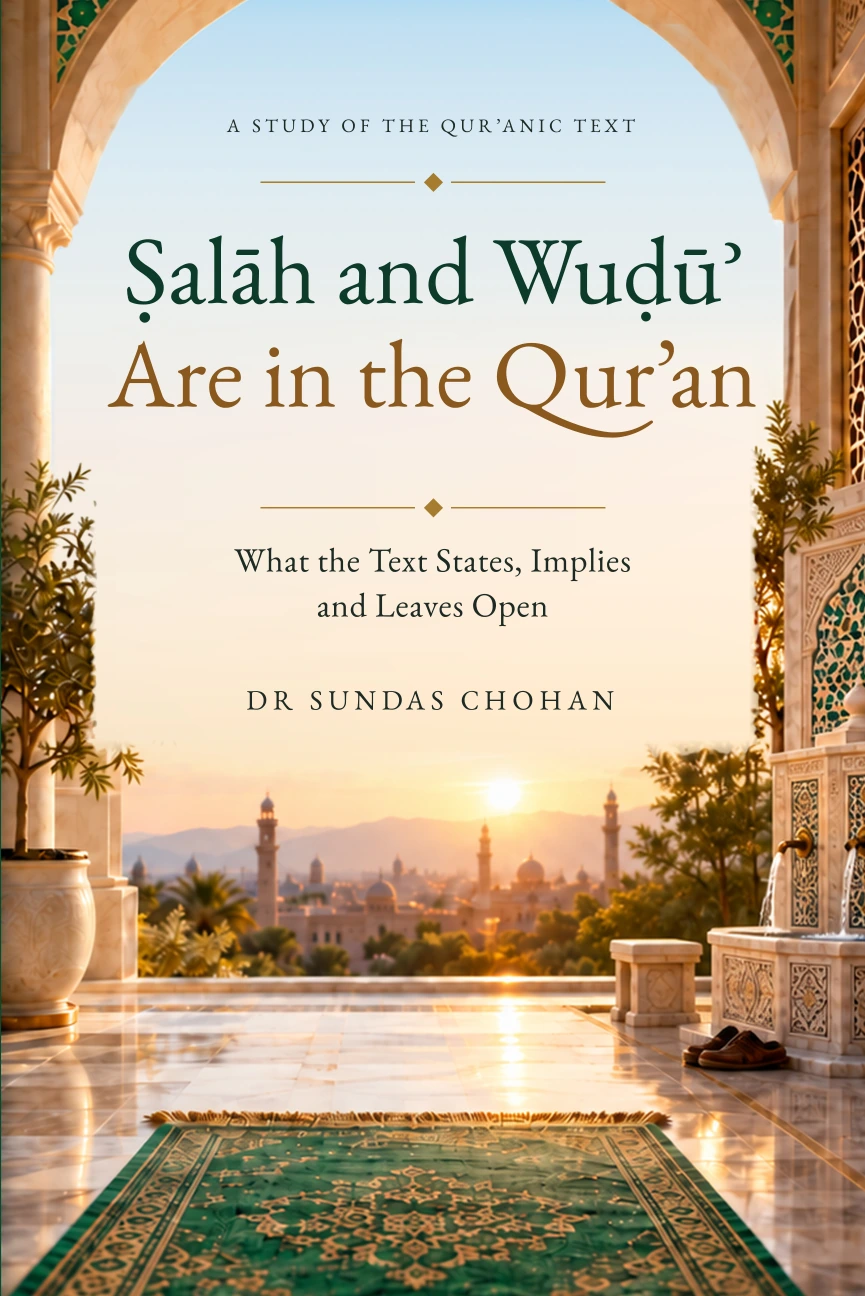
A study of the Qur’anic text
What the Text States, Implies and Leaves Open
What does the Qur’an itself require when we pray, and which finer details have been handed down through Muslim practice?
This study works through the verses on ṣalāh and the washing before it, weighing the Arabic wording, competing readings and the strength of the evidence. Each claim is distinguished by what the text states, implies or leaves open.
Three short questions from the book. Choose an answer to see the reasoning and where to read more.
The book’s central distinction is between what the Qur’an states, what it implies and what it leaves open. A familiar practice can be valuable without every detail being a command of Allah.
The aim is more understanding in prayer. The free pack gives you the key verses to keep checking for yourself.
Free printable companion · 5 pages
A concise reference to keep beside you as you read or pray, or share with family and friends.
Enter your name and email address to get the free pack. No purchase required.
By requesting the pack, you agree to receive emails from Dr Sundas Chohan about Ṣalāh & Wuḍūʾ, Qur’anic research, related books and resources, and occasional requests for reader feedback. You can unsubscribe at any time. Privacy policy.
5 pages · Printable PDF · Name and email address required
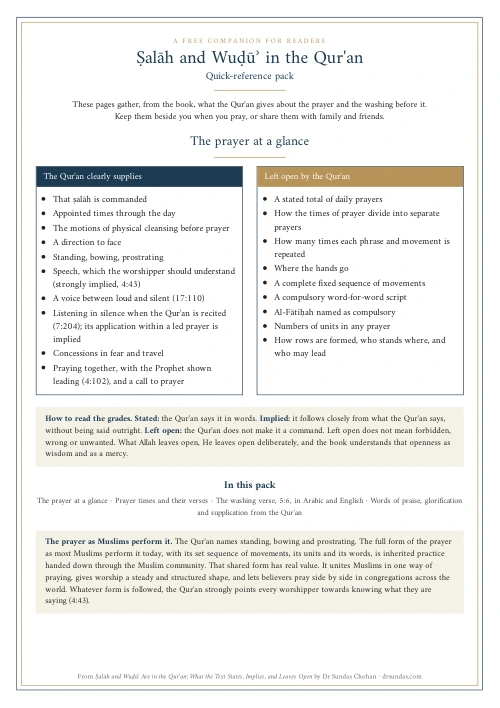
Inherited Muslim practice gives prayer its shared form. The book asks which details are established by the Qur’an itself, and which may be kept as practice without calling them a command of Allah.
Leaving a detail open is not the same as prohibiting it. The study values the shared form of Muslim prayer while testing claims about its authority against the text.
The Qur’an says it directly in words.
It follows closely from the text, without being said outright.
The Qur’an does not make the detail a command. That does not make the practice forbidden or without value.
Which prayers are named? What do the time verses support, and do they state a total number of daily prayers?
What does 5:6 require? What do its wording and canonical readings establish about washing and wiping?
What establishes standing, bowing and prostration? Does the text fix a complete sequence or every detail of posture?
What is said about recitation, understanding, praise and supplication? Is al-Fātiḥah explicitly required in each prayer?
Does the Qur’an prescribe numbers of prayer units, or fixed counts for words and movements?
What is the permission to shorten prayer linked to? How does the text address fear, travel and what a worshipper can manage?
Beyond the quick reference
The free pack gathers key material in a few printable pages. The full book examines the evidence behind those summaries, including where conclusions remain open to discussion.
Explore the full book
The full book examines the evidence behind the quick-reference pack. Paperback, Kindle and an Amazon sample will be linked here when available.
Amazon links coming soon.